
Introduction
For many active manual wheelchair users, the goal is universal: Travel further, tackle rough terrain with ease, and maintain independence without switching to a full powered chair. Powered attachments now make that goal more accessible than ever! These innovative add-on devices transform a manual wheelchair into a hybrid mobility solution, delivering electric assistance when and where you need it.
Whether you require a subtle boost to your own pushes, effortless cruising for covering longer distances, or something with off-road capability, there’s likely an attachment designed for your lifestyle. In this article, we’ll explore the main types of attachments with real-world examples, follow their fascinating development processes, and pull back the curtain on how these precision-engineered devices are made.
What are powered attachments?
Powered attachments (also commonly referred to as power-assistance devices or add-ons) are systems that bolt or clamp onto most standard manual wheelchairs. They often include a motor, battery, controller, and mounting hardware. The big advantage? You keep the lightweight, maneuverable frame you love whilst also gaining an electric boost on demand. Many are easily removable for travel purposes or for situations where you’d prefer manual propulsion.
Main categories and standout examples:
1. Push-rim Activated Power-Assist Wheels
These replace your rear wheels entirely. Sensors in the push rims detect how hard you push and add motor assistance to compensate. This keeps an element of self-propulsion but with far less effort, ideal for preserving shoulder health on longer journeys or steeper inclines.One of the leaders in this category are the Alber e-motion series (with its newest iteration being the M25 model). These lightweight wheels integrate motors and batteries in the hubs and offer programmable assistance levels, cruise mode, and rollback delay for slopes.
2. Rear-Mounted Drive Units
A compact powered wheel attaches to the back of your chair (often via the axle or a bracket). You steer normally with your hands on the push rims, while the unit provides forward propulsion or full power. Controls range from simple controllers to smartphone apps or wearables. These are lightweight, travel-friendly, and great for mixed indoor/outdoor use.A popular example of the Rear-mounted drive device is the Smoov One, which mounts discreetly and is directed via an app on your smartphone or their standard wireless hand-controllers.
3. Front-Mounted Trike / Power Attachments
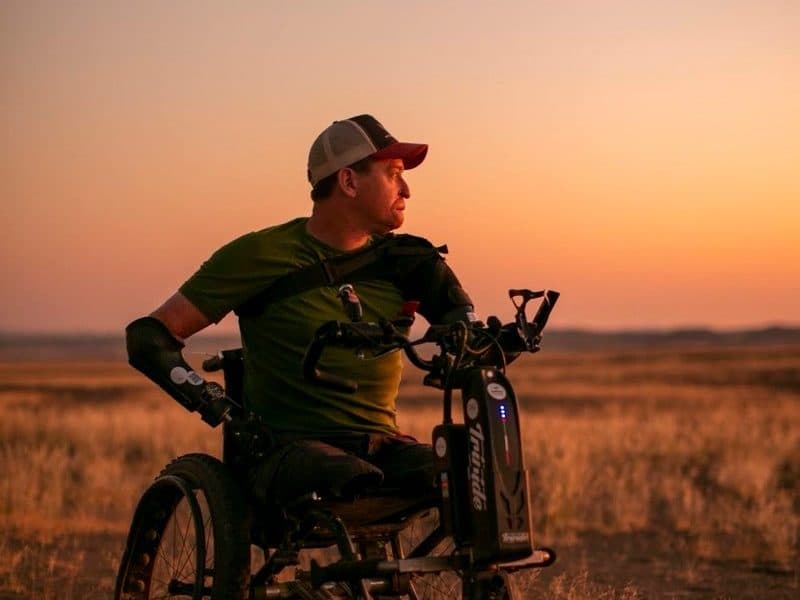
These clamp onto the front of the frame, lift your front castors off the ground, and turn your wheelchair into a stable, powered trike. A larger front wheel (often off-road spec) and robust motor deliver significant torque for slopes, gravel, grass, and uneven paths; perfect for outdoor adventures while keeping your rear wheels in use for familiar handling. Many are quick to attach/detach and store compactly, with most models fitting comfortably in the boot of a car or along the back seats.
A standout in this category comes from Italian innovator and our partner, Tri ride. Their front-mounted systems (such as the Trekking Power and various specialized models) are renowned for high-torque motors, advanced electronics, and exceptional build quality using premium materials such as aluminum and carbon fiber. Users praise the ease of use, life-changing accessibility differences when using it, powerful performance on challenging terrain, and thoughtful customization options (including adaptations for tetraplegic users)
Other notable options in this sector include devices from brands like Batec and Rio Mobility’s Firefly series. Some attachments even blend handcycle elements for active upper-body exercise combined with power assist.We also manufacture our own non-powered cycling attachments here at DaVinci, the Ciclo. The Ciclo doesn’t have a powered version as of right now, however it has aided many of our customers with regards to staying active and maintaining upper body strength. Click here to explore the Ciclo further!
A Brief History and Development of Powered Attachments:
The story of powered wheelchair mobility begins in the mid-20th century. After World War II concluded, demand surged for better mobility options for injured veterans returning home. In the early 1950s, Canadian engineer George Klein and his team developed one of the first practical electric wheelchairs, which was later commercialized and produced on a wider scale. Full powered wheelchairs evolved steadily through the 1960s–1980s, but many long-term active users preferred the lighter, more responsive feel of manual chairs (especially after the lightweight rigid-frame revolution led by brands like Quickie in the 1980s).
This created a new challenge: how to add power without sacrificing the manual chair’s advantages? The solution emerged, powered attachments.
Push-rim assist wheels arrived with the original Alber e-motion (around 2008), giving users amplified propulsion while keeping their own pushing motion. Rear-mounted units like the SmartDrive (first generation around 2013–2014) brought compact, intuitive power that could be added or removed as needed. Around the same era: Front-mounted trike-style attachments gained traction, driven by user-inventors who required a device with outdoor capability.
A particularly inspiring example is Triride, founded in Italy by Gianni Conte. Facing limitations with existing aids for his own wheelchair, Conte engineered a lightweight, compact, yet extremely powerful front attachment capable of handling steep slopes and rough terrain. What started as a personal solution quickly garnered interest from friends and fellow users. This demand led to the formal establishment of Triride s.r.l. (with co-founder Marta Nunez), turning personal ingenuity into a company dedicated to high-performance, user-centered mobility devices.
Since then, development has accelerated thanks to:
-Lighter, higher-capacity lithium-ion batteries.
-Efficient brushless motors and high-torque designs.
-Advanced sensors, gyroscopes, and programmable electronics.
-Stronger / lighter materials (aluminum alloys, carbon fiber).
-User feedback loops and real-world testing (including extreme conditions).
Today’s attachments are safer, smarter, more customizable, and far more capable than early versions; whether for daily commuting, work, travel, or adventure.
How Powered Attachments Are Manufactured:
Creating these devices is a sophisticated process blending medical-device standards, precision engineering, and deep user insight. While specific techniques vary by manufacturer, here’s what a typical journey from concept to finished product might look like (with insights drawn from leading innovators like Triride’s production approach):
Design & Engineering
Teams start with extensive user research, biomechanical / anatomical analysis, and CAD modeling. Compatibility across dozens of wheelchair frames is critical, so modular clamp/adapter systems are developed. Simulations test weight distribution, stress points, and ergonomics. For companies like Triride, the process often begins with input on real-world problem-solving from users themselves.
Component Fabrication
Frames, clamps, and structural components: Cut and machined from high-grade stainless steel, aluminum alloys, or carbon fiber using CNC machines, laser cutters, and precision lathes.
Motors: Custom or specialized high-torque electric motors (hub or drive-wheel designs) built for efficiency and durability.
Batteries: Lithium-ion packs assembled with sophisticated Battery Management Systems for safety, thermal control, and optimized range.
Electronics & controls: Custom circuit boards, sensors (force, tilt, speed), and user interfaces. Many systems are programmable for individual needs (e.g., different assist levels or adaptations for limited hand function).
Assembly & Integration
Skilled technicians build modular units in controlled environments. Wiring, powertrains, and controls are integrated. Many premium manufacturers (including Triride) emphasize build-to-order production, allowing custom clamp configurations and final programming based on the user’s specific wheelchair and requirements.
Testing & Quality Control
Rigorous multi-stage testing is non-negotiable:
-Structural and load testing
-Electrical safety and waterproofing (IP ratings)
-Performance validation on test benches and in extreme real-world conditions (hills, rough terrain, long-range runs)
-User trials and feedback integration.
Customization, Certification & Support
Final touches can include firmware updates, accessories, and user-specific setup. Ongoing after-sales support, spares, repairs, and training is a hallmark of quality-focused brands.
The result of this process? Reliable, safe, high-performance devices that feel like a natural extension of the wheelchair (and yourself) rather than an afterthought.

Benefits, Considerations & The Road Ahead:
Key benefits of powered attachments include reduced physical strain (especially on shoulders and arms), greater independence and range, access to varied terrains, and the ability to maintain an active lifestyle with independence. Removable designs preserve the chair’s portability and manual optionality.
When choosing, consider compatibility with your wheelchair, added weight, desired range/terrain, control preferences, battery charging logistics, and professional assessment (mobility specialists such as ourselves are invaluable here). Cost varies widely, and funding/insurance options differ by nation/region.
Looking forward, expect even smarter integration (apps, AI-assisted controls, connectivity), lighter and more powerful components, improved all-terrain performance, and greater customization. User-driven innovation, like the story behind Triride, continues to shape the category.
Powered attachments have come a long way from early concepts & experiments to today’s sophisticated, life-enhancing tools. They represent a beautiful middle ground: the freedom and responsiveness of a manual chair combined with the power and reach of electric assistance.
Whether you’re looking for a gentle daily boost or a gateway to new adventures, these devices are opening doors for wheelchair users everywhere. Always consult qualified professionals for personalized recommendations, trials, and fitting. The future of personal mobility is more flexible, capable, and empowering than ever.
If you’re looking to pick up a powered attachment of your own, get in touch with us today to discuss your options and discover which product works best for you!